
When you’re building or renovating, the type of stone you choose can set the entire tone of your home. In Ireland, stone has a long history in our towns and countryside, giving homes a sense of belonging to their surroundings. Choosing the right material isn’t always simple, but once you understand the options, it’s much easier to feel confident in your decision.
This guide will take you through the main types of building stone for houses, colour choices, styles, and finishes, with practical advice on how to make the right call for your property.
How to Approach Choosing Your Stone
When selecting building stone for houses, it helps to start by analysing your property and project.
- New build vs renovation. If you’re working on an older home, you may want to match existing stone or stay close to the traditional style. With a new build, you have complete freedom to decide
- Architect and designer input. Professionals often recommend materials or styles to complement your home’s design.
- Planning permission. In some areas, local guidelines will influence what finishes are acceptable.
- Details and edging. Think about whether your home has sharp lines that suit cut stone, or softer features where tumbled or rubble stone feels more natural.
From there, the decision usually comes down to three main elements: The material itself, the colour, and the style or finish.
Materials: Types of Stone For Houses
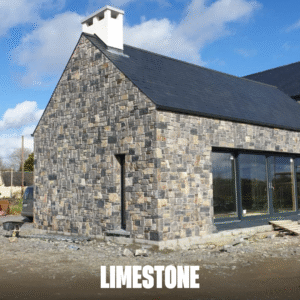
Limestone
Limestone is one of the most versatile options, used widely across Ireland. Available in light creams, greys, and off-whites, it pairs beautifully with render or stone bricks. It’s a safe, elegant choice for both new builds and renovations. This image features White Limestone.

Sandstone
Sandstone offers warmth with its earthy tones of gold, red, and brown. It works especially well in rural and traditional homes, giving them a welcoming, natural character. The image shown features Cream Sandstone.
Granite
Granite blocks are exceptionally strong and weather-resistant. Typically darker in colour, greys, silvers, or speckled mixes, granite suits modern houses or those aiming for a bold, refined look. The wall featured here contains a mix of tumbled Silver Granite & Brown Granite.

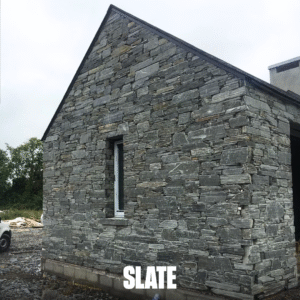
Slate
Slate is sleek and smooth, usually in darker greys and blacks. Slate building stone is ideal for contemporary houses with clean lines, as it creates a crisp, modern finish. The image shown features Donegal Slate Building Stone.
Quartz
Quartz adds brightness and sparkle, often used in lighter builds or as a feature accent. It’s less common than limestone, sandstone, or granite, mainly because of its high price point. The featured image shows Golden Quartz Building Stone.

Colour Choice
Light vs Dark Stone (or a Mix)
Light stone can make a home feel bigger and brighter. Darker shades create a bold, modern look. Many homeowners opt for a mixture of stone tones to give depth and individuality. White limestone is a great choice if you like variety, as it contains different colours throughout, including dark, light grey, and even golden creams. Harding Stoneyard showrooms also host various walls of mixed stone to showcase how they work well together.
Matching with Your House
Take into account the roof, window frames, render, garden walls, and even interior design plans. Choosing a stone that blends well ensures a cohesive, natural finish.
Irish Colour Preferences
Lucky for us, Ireland has a great selection of quality stone, and depending on where you are located, different local stones may be trending. In the South East of Ireland, for example, Kilkenny Limestone is one of the most popular brick purchases. And in the South West of Ireland, Liscannor Sandstone is a more commonly used stone. So there is an element of local preferences, but nationwide delivery is available for all products sold at Harding Stoneyard.
Finishes & Styles
The way stone is shaped and laid can change the look entirely.
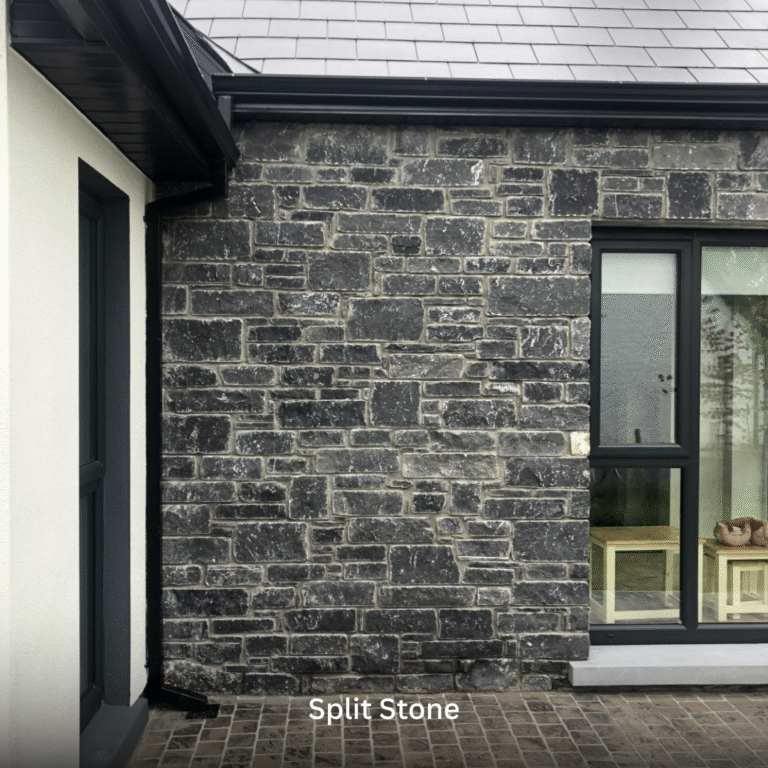
Split Stone
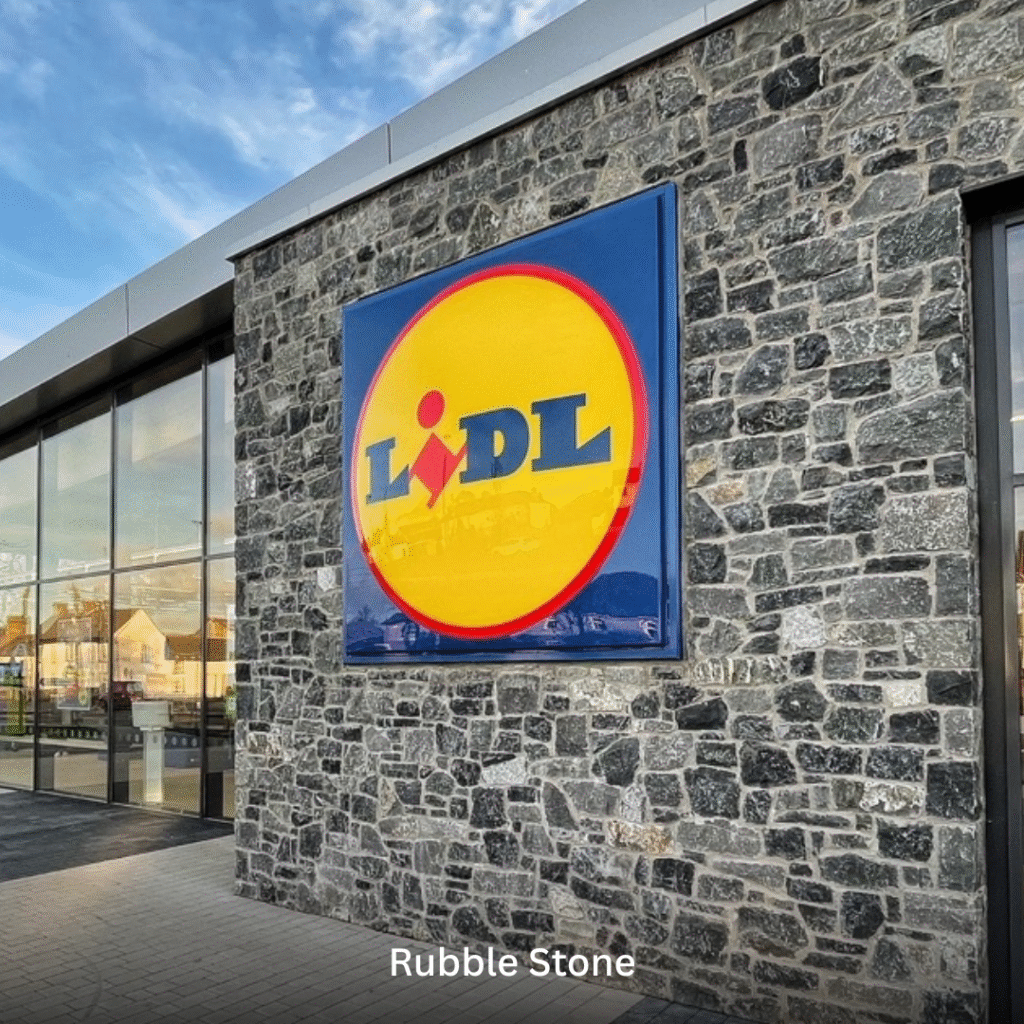
Rubble Stone
Tumbled Stone
Split stone is mechanically split, exposing a rough, natural surface that shows off the stone’s character. It adds texture and suits both traditional and modern builds.
Rubble stone is irregular in size and shape, laid in a random pattern. It has a rustic, natural look, perfect for cottages and countryside houses.
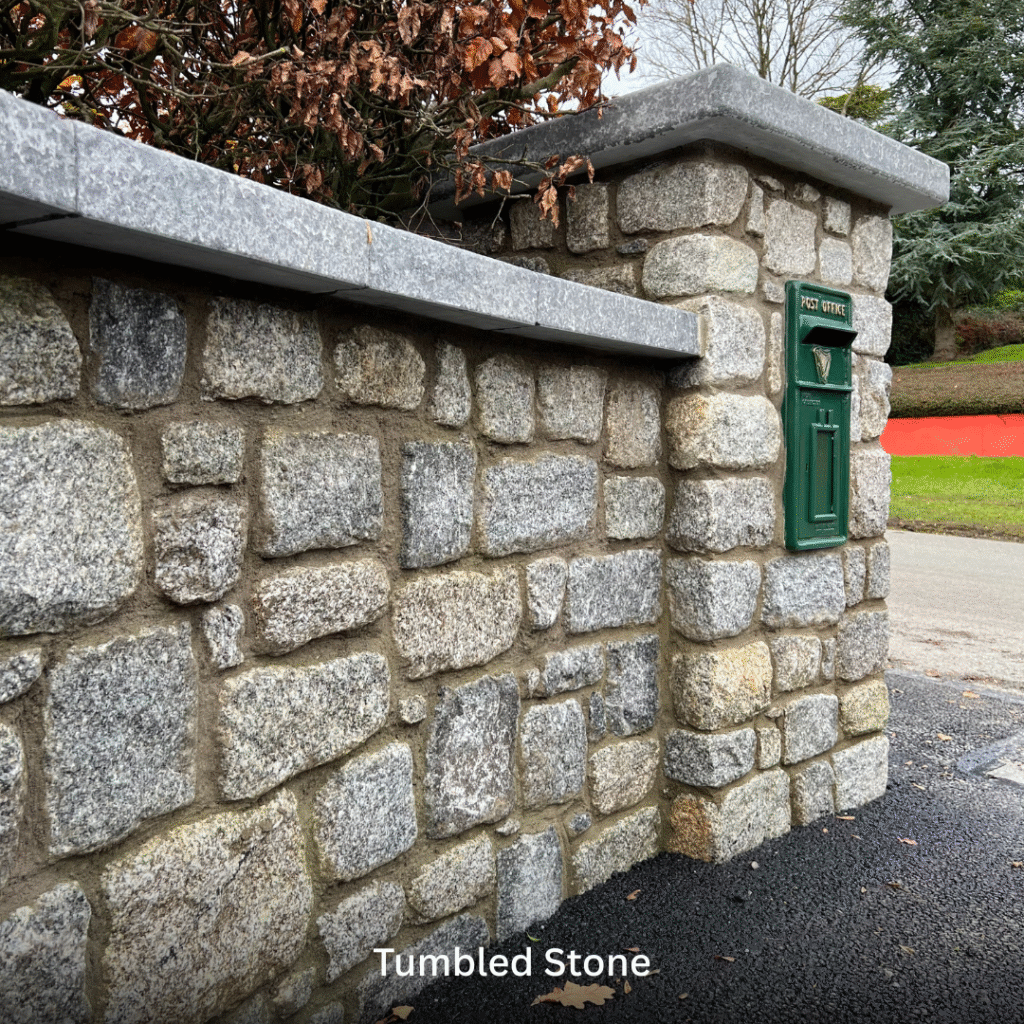
Tumbled stone has a soft, smooth, aged appearance. The effect comes from tumbling rough stone in a rotating barrel & rounding its edges. This gives a traditional, weathered feel.
Wet Joint Vs Dry Joint
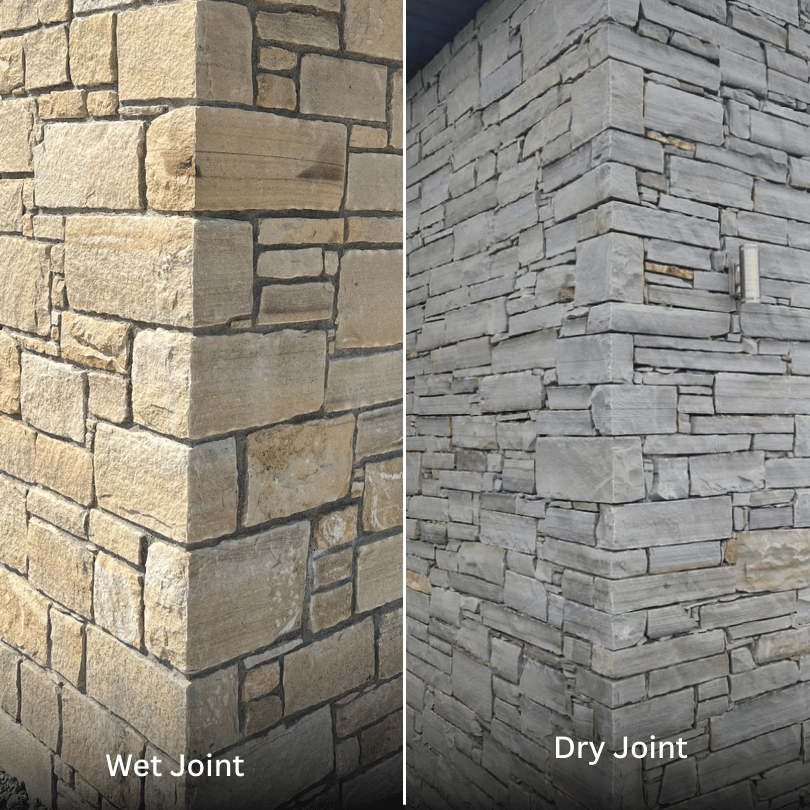
Dry Joint: Stones are laid tightly together without visible mortar. Creates a sharp, modern effect, especially with granite building stone or slate.
Wet Joint: Mortar is visible between stones. This softens the look and highlights each individual piece, ideal for traditional styles and sandstone.
Conclusion
The right building stone for houses depends on material, colour, and finish, as well as the character of your property. While guides like this can help you narrow your choices, nothing beats seeing the stone in person and talking to an experienced advisor.
At Harding Stoneyard, our showrooms in Cork and Kilkenny display every option side by side. Our expert team can look at photos of your home, discuss your ideas, and guide you to the best choice. We can even combine stones to create bespoke mixes and show you how they work together in full displays.
Visiting the display areas is the best way to see the true colours, compare styles, and make a confident, informed decision, with advice on price and delivery included.
📞: 0567726177: Kilkenny
📞: 0214297773: Cork
📧: info@stoneyard.ie
For project inspiration, follow our Instagram and Facebook pages where we showcase finished projects of our products.
FAQs
This will depend on what style of home you are going for. Limestone and granite are commonly used in traditional Irish homes, while sandstone and slate are popular for modern designs. It is best to talk to a sales rep who can help you make the best choice for your style.
Durability isn’t something you need to worry about when choosing between limestone, sandstone, granite, slate, or quartz, all of our natural stone blocks will last for generations. The real difference comes down to style and colour, not strength.
If your priority is making sure a wall stands up to harsh Irish weather, the best step you can take is adding a wall cap with a proper drip line. This helps water run off cleanly, protecting the stonework underneath and keeping your wall looking its best for years to come.
Dry joint gives a crisp, mortar-free finish. Wet joint shows mortar between stones, creating a softer, traditional look.
Consider if you have any other stone surrounding your house, including your window sills, kerbs, or garden or surrounding walls.
If you are unsure which stone to choose for your house, it’s best to bring images and samples to our experienced team, who will be able to advise what options are best for you.
Yes! Many homeowners use limestone for the main exterior and incorporate sandstone for additional colour, giving your job a personal touch.
